

Cornhole feels like a game that has always existed. And in a way, that’s true.
What began as a simple tossing game in American backyards grew within a few decades into a structured sport with official leagues, international tournaments, and a rapidly expanding European market.
To understand where cornhole stands today, we need to go back to where it started. Not familiar with the game yet? Then start by reading what cornhole is exactly to understand the basics.
The Origin of Cornhole: Myth and Midwest
Several stories circulate about the origins of cornhole.
Some sources refer to 14th-century Germany, where a similar game involving throwing bags toward a target was played. Historical evidence is limited, but the concept of a beanbag tossing game is certainly not new.
The modern, recognizable form of cornhole almost certainly emerged in the Midwestern United States — particularly in Ohio, Kentucky, and Illinois.
Cornhole as a Social Backyard Game
In these regions, the game was played informally for generations during:
-
Tailgate parties at American football games
-
Backyard BBQs
-
Family gatherings
-
Local festivals
The game was inexpensive to build, easy to explain, and instantly competitive. Those are exactly the qualities that allow something to endure culturally.
Why Is It Called “Cornhole”?
The name “cornhole” is quite literal.
The original bags were filled with dried corn kernels — “corn.” The goal was to throw them into the “hole” in the board. Corn + hole.
From Corn to Modern Variations
The corn filling gave the bags a specific weight and a distinctive dampening effect upon landing. It provided both control and a recognizable sound when the bag hit the board.
In professional competition, plastic resin pellets are now commonly used. They are more durable and offer highly consistent performance — an important factor in competitive settings.
At Gockel, we deliberately choose corn-filled bags. Not as a statement against modern developments, but as a commitment to the traditional playing experience. It reflects how cornhole became popular: pure, accessible, and social.
Over time, the game also developed its own terminology. Terms like “airmail” and “wash” are now standard within cornhole jargon.
The Professionalization of Cornhole
Until the late 1990s, cornhole remained primarily a regional recreational game. That changed in the early 2000s. With the founding of organizations such as the American Cornhole Organization (ACO), the game was structured for the first time. Later, the American Cornhole League (ACL) followed.
What Changed Through Standardization?
Clear guidelines were introduced for:
-
Board dimensions
-
Throwing distances
-
Competition structures
-
Tournament formats
Standardization made cornhole comparable. And once something becomes comparable, competition emerges. And where competition grows, quality improves.
Media, Livestreams, and International Visibility
A major acceleration came when tournaments began to be broadcast via livestreams and U.S. sports networks. Cornhole became visible.
Players developed recognizable playing styles. Rankings were established. Prize money attracted serious competitors.
What once began as a backyard activity evolved into a sport with professional players and a structured annual calendar — without losing its accessibility.
The Growth of Cornhole in Europe
From around 2015 onward, cornhole also began gaining visibility outside the United States.
Europe discovered the game through:
-
International events
-
Social media
-
Festivals
-
Corporate events
Cornhole requires no complex infrastructure. Just two boards and eight bags. That makes it scalable — from campsites to trade show floors.
The First Provider in Europe (2013)
While cornhole was already well organized in the United States, the European market was still in its infancy. In 2013, supply was limited. There were no specialized webshops, no clear quality standards, and little public awareness.
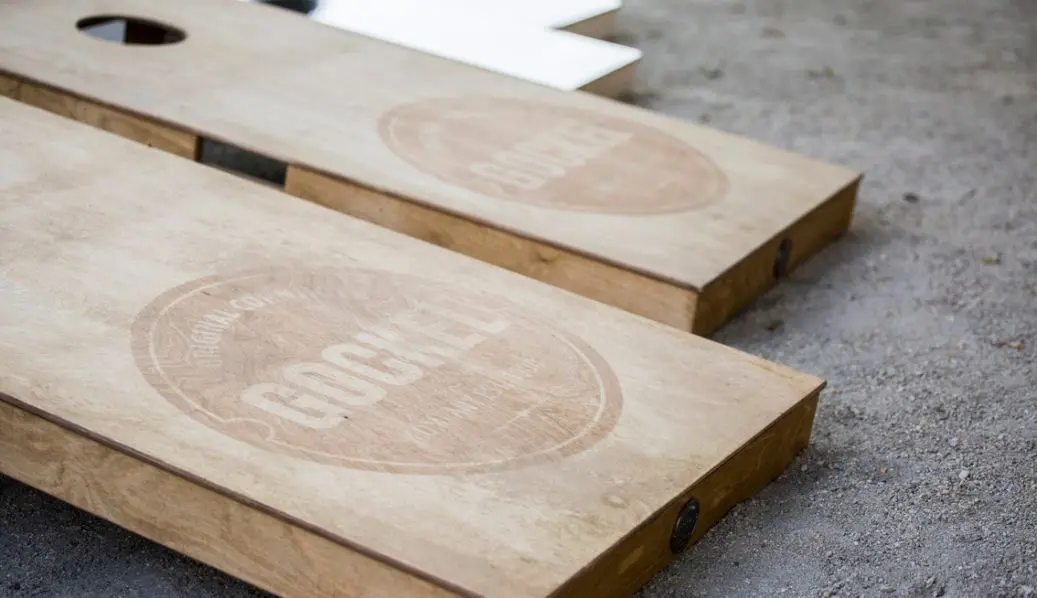
That same year, Gockel Original Cornhole was founded as the first provider of high-quality cornhole sets in Europe.
What started as a niche product grew over the following years into a recognizable game within events, corporate settings, and recreational use. By focusing on quality, durable materials, and consistent craftsmanship from the beginning, Gockel contributed to the introduction and professionalization of cornhole in the European market.
Why Cornhole Has Endured (and Continues to Grow)
Many games disappear as trends change. Cornhole does not.
That’s because it is:
-
Instantly playable
-
Easy to understand
-
Competitive as skill increases
-
Suitable for virtually any setting
From recreational backyard game to professional league — the core remains the same. And that is what makes it sustainable.
Frequently Asked Questions About the History of Cornhole
Is cornhole truly European in origin?
There are theories, but the modern, documented development took place in the United States.
When was cornhole officially organized?
In the early 2000s, with the founding of official organizations and competitive leagues.
Why are there different types of bag fillings?
Professionalization led to variations designed for specific playing conditions, such as tournaments.
When did cornhole begin in Europe?
From 2013 onward, the game became professionally available in Europe, with Gockel as the first specialized provider.